
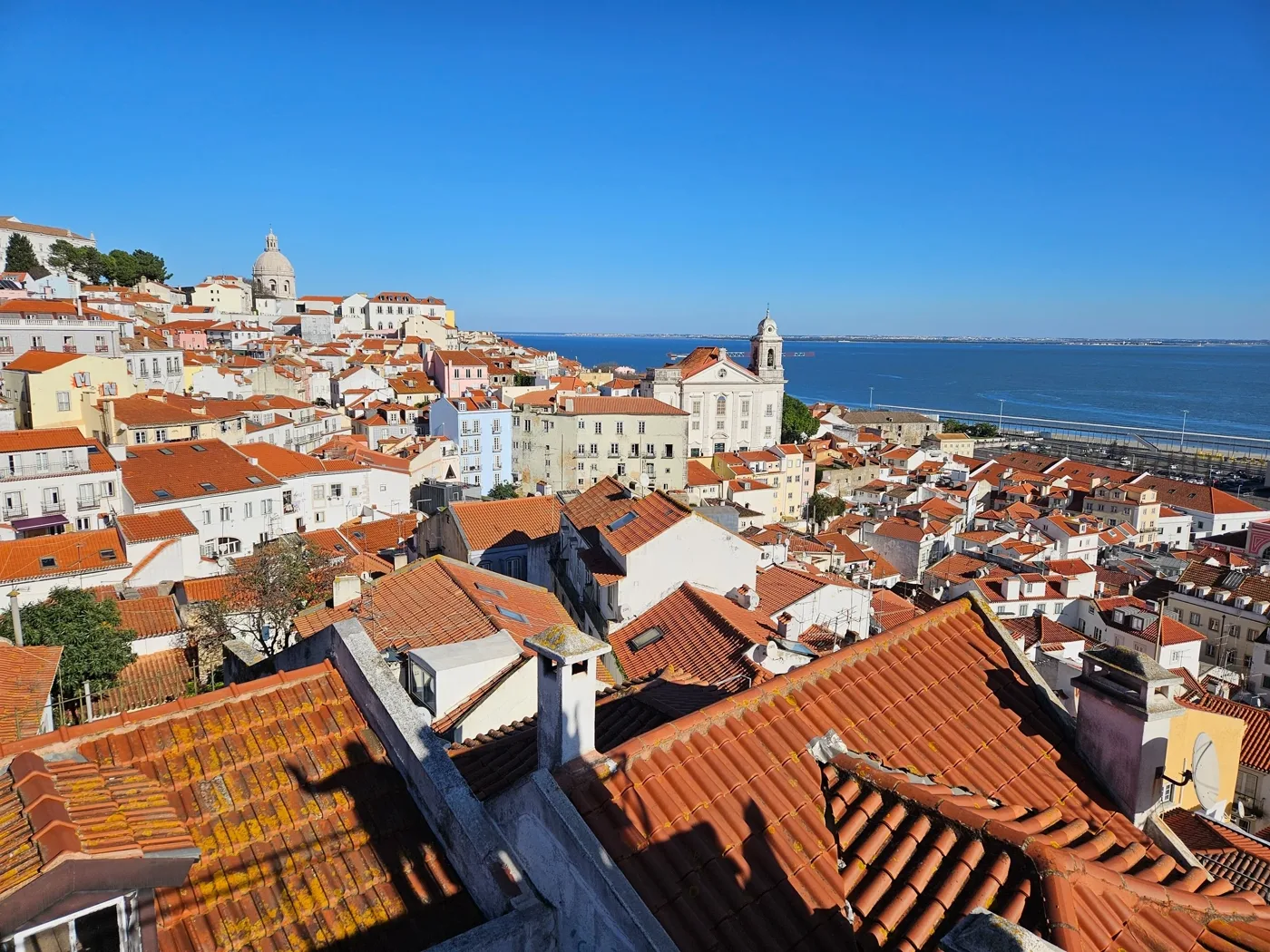
Alfama survived the 1755 earthquake that destroyed much of Lisbon — and that's why it remains the city's most authentic, labyrinthine neighbourhood, with narrow streets that were never designed for cars, only for people on foot (or, these days, for electric tuk-tuks). The name comes from the Arabic "Al-hamma", meaning "springs" or "baths", a legacy of the nearly 500 years of Moorish rule before the Christian Reconquest in 1147.
What to see in Alfama
São Jorge Castle
At the highest point of the neighbourhood, with origins dating back to Roman and Moorish times. Beyond the 360° views over the city, the gardens and the archaeological exhibition inside are well worth the visit.
Lisbon Cathedral (Sé)
The city's oldest cathedral, built in 1147 on top of a former mosque, right below the castle. It's also where the iconic Tram 28 passes, in one of the most photographed images of Lisbon.
Santa Luzia and Portas do Sol viewpoints
We've described them in detail in our guide to Lisbon's viewpoints — but no visit to Alfama is complete without stopping at at least one of the two.
Feira da Ladra
Lisbon's oldest flea market, held every Tuesday and Saturday morning next to the National Pantheon. Great for finding antiques, vinyl records and souvenirs you won't find in the tourist shops.
Fado in Alfama
Alfama is, alongside Mouraria, the birthplace of Fado — the UNESCO Intangible Heritage music genre that sings of Lisbon's saudade (longing). Many of the neighbourhood's traditional Fado houses also work as restaurants, with dinner included in the price of the show. For a more informal, free experience, it's worth wandering the alleys late at night — it's not unusual to hear fado vadio ("amateur Fado") drifting out of a tavern, sung by whoever simply shows up to sing.
How to explore Alfama without getting lost (or exhausted)
Alfama is, by design, a maze — the streets were built in a spiral to confuse invaders centuries ago, and they still confuse GPS to this day. That's part of the charm: getting lost in Alfama is almost a requirement of the visit. But there's a less romantic side: the streets are steep, with staircases and cobblestones that get slippery in the rain, and the distances between points of interest are greater than they look on the map.
The most comfortable way to see the essentials of Alfama without draining your energy for the whole day is by private electric tuk-tuk — it climbs the steepest streets effortlessly, slips into alleys where normal cars won't fit, and lets you stop at exactly the right viewpoints for photos, without having to walk it all uphill.
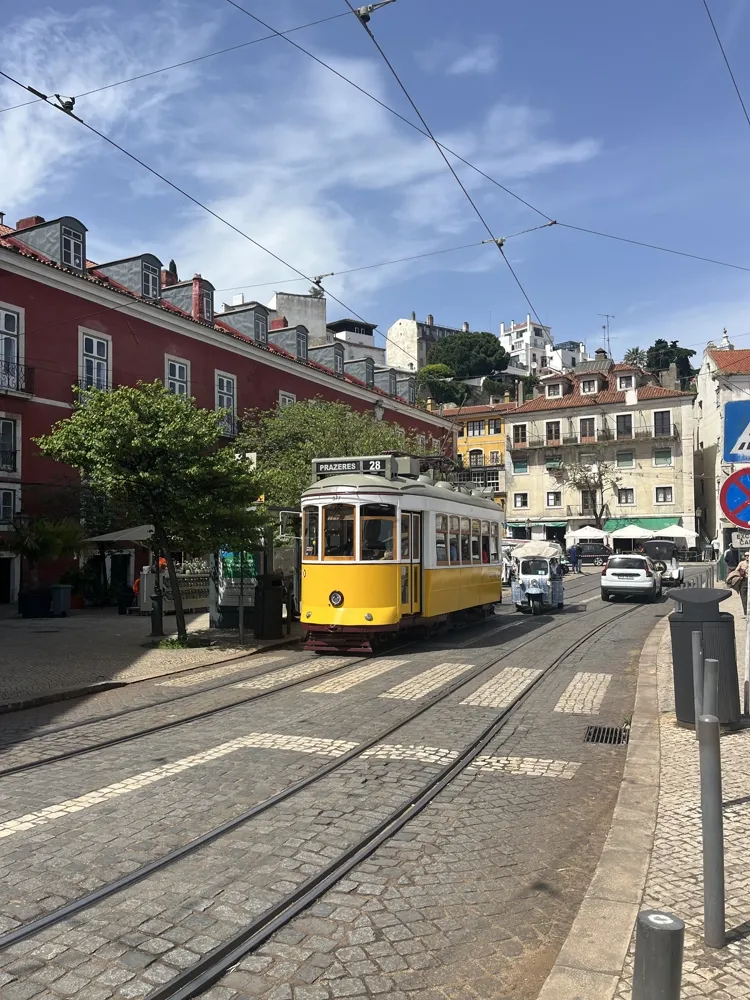
Historic Centre Tour — 2 hours, €180 per group
Alfama, Graça, Chiado and Bairro Alto in a single private tour, with a certified guide.
If you'd like to combine Alfama with Belém and the viewpoints on the same day, the Half Day tour (4 hours) is the most complete option. And if you'd rather build your own custom itinerary, take a look at Lisbon à la Carte.